
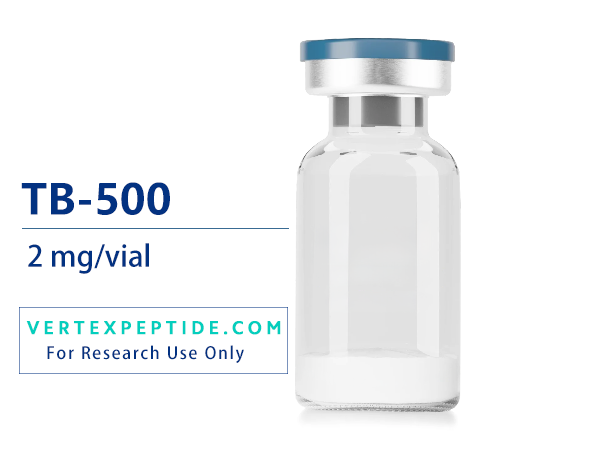
TB-500, scientifically termed Thymosin Beta-4, is a peptide found naturally in nearly all human and animal cells. Its main role is to facilitate healing, stimulate cellular growth, and boost cell migration and division. First identified in the 1960s, TB-500 was extracted from the thymus gland during studies on thymosins, a peptide group believed to influence immune responses and tissue regeneration.
- Molecular Formula: C38H68N10O14
- Molecular Weight: 889.018 g/mol
- CAS Number:
What Are the Effects of TB-500?
TB-500 is recognized for several key functions:
- Enhanced Healing: It speeds up recovery in tissues like skin, muscles, the heart, and eyes.
- Reduction of Inflammation: Its anti-inflammatory effects aid in injury recovery.
- Increased Flexibility: By promoting actin polymerization, it enhances cellular adaptability and mobility.
How Does It Work?
TB-500 operates by boosting actin, a critical protein within the cytoskeleton of eukaryotic cells. Actin is essential for cell division, movement, and shape maintenance. Through its regulation of actin, TB-500 supports tissue repair and recovery from damage.
Although preclinical research—particularly in wound repair and heart injury models—shows promise, human clinical trials remain limited, leaving its safety and effectiveness un fully confirmed. Most insights come from animal studies and lab-based cell research.
Role in Sports Research
In athletic circles, TB-500 has sparked interest for its potential to hasten injury recovery, lessen inflammation, and enhance flexibility. However, such applications are unofficial and lack clinical backing. The World Anti-Doping Agency (WADA) prohibits its use in competitive sports, citing an unfair edge in recovery.
TB-500 holds considerable promise for tissue repair and healing, yet its human applications, safety, and benefits need more robust clinical evidence. Its popularity in sports, while notable, lacks scientific support and is deemed unethical and illegal in regulated competitions.
Dosage Guidelines
To determine TB-500 dosages from a 5 mg vial diluted in 2 mL of bacteriostatic water using a 0.5 mL (50-unit) insulin syringe, we’ll explore two protocols—twice weekly and daily—over a 4-week period. These calculations are illustrative; consult a medical professional for actual dosing.
Concentration Breakdown
Reconstituting 5 mg (5000 mcg) of TB-500 in 2 mL yields a concentration of 5000 mcg / 2 mL = 2500 mcg/mL.
Twice-Weekly Protocol (4 Weeks)
Typical doses range from 200 mcg to 500 mcg. For a 500 mcg dose:
- Volume: 500 mcg / 2500 mcg/mL = 0.2 mL.
- In a 50-unit syringe: 20 units (since 0.5 mL = 50 units, 0.01 mL = 1 unit).
Daily Protocol (4 Weeks)
Daily doses often span 2 mg to 10 mg; a common starting dose is 2 mg (2000 mcg).
- Volume: 2000 mcg / 2500 mcg/mL = 0.8 mL.
- In a 50-unit syringe: 80 units.
Doses per Vial
- Twice-weekly (500 mcg): 10 doses per vial.
- Daily (2000 mcg): 2.5 doses per vial.
4-Week Cycle Needs
- Twice-weekly: 8 doses total (2 per week × 4 weeks) = 1 vial suffices.
- Daily: 28 doses total (1 per day × 4 weeks) ≈ 12 vials required.
Given the variability in TB-500 dosing and the absence of standardized medical guidelines, professional medical advice is essential for safe use. Its potential benefits must be weighed against possible risks with caution.


There are no reviews yet.